

Last night, I wrapped up Draft #4 of my novel-in-progress. It’s still long—about 15,000 words longer than my other books—and I know it needs tightening. But it’s a substantial improvement on Draft #3, and that counts for a lot.
Writers argue vigorously over the premise that a writer must write every day. Some insist that we must write daily to keep the pump primed. In On Writing, Stephen King said that he tells interviewers that he writes every day except Christmas and his birthday because he thinks that makes him sound normal, but the truth is that he also writes on those days. If you google “must a writer write every day?”, you’ll find dozens of posts defending both the sides of the debate.
The truth, I think, is that you need to do what works for you. If writing every day keeps you in touch with the work, the ideas, the muse—then yes, write every day. If you can maintain your thoughts about the piece even if you skip a day every now and then, take your breaks. If you can—or need to—take weeks or months off after large projects, do what you need to.
The prime example of this is not a writer, but a figure skater, Olympic gold medal winner Alysa Liu. I’d never heard of her before her famous program a few weeks ago. My friend and I watched the women’s finals as we ate dinner, and even without knowing anything about Alysa, we both commented on how joyful she seemed. After she won, more details came out: how she quit skating after the Beijing Olympics in 2022; how she took time off to hang out with friends and start college; and how, when she went back, she did it on her own terms. And clearly, her approach has worked for her.
I’d left Draft #4 to languish during last few months of 2025. That’s my selling time, when I’m juggling my day job and numerous holiday markets and book events. When your books are holiday-themed, the first quarter of the year is when you get paid for the books that sold online in November and December, the second quarter is dead, and the third quarter starts to perk up. Then, as you move into the fourth quarter, everybody wants you, and you go wherever you can because January is coming.
In typical fashion, I was sick by mid-December. It happens every year, so I call the doctor, get the meds, and go on. Between Christmas and New Year’s, I took time to rest, knowing as I did that I would need to get back into a disciplined practice in order to meet my self-imposed publication date for the new book.
Then, on January 1, I did two things: I stopped drinking, and I started writing.
The two were actually related for me. I love a crisp white wine, but if I’ve had wine with dinner, I’m much more inclined to lie on the sofa and relax after dinner, possibly dozing off for about 20 minutes. Since I couldn’t afford that kind of sloth if I wanted to finish the book, I cut out the wine, substituting Töst, a wonderful sparkling white iced tea with cranberry and ginger that I’d found a few weeks earlier at Whole Foods. Turned out, this was exactly the wine substitute I needed. Not only did it help me drop the holiday weight, but by perking me up instead of slowing me down, Töst gave me exactly the boost I needed in the evening.
And so, I wrote every evening. Sometimes, I only edited on a couple paragraphs. Other nights, I wrote new material, filling in gaps I’d left because I hadn’t worked out how to get from A to B. I didn’t worry about writing for X minutes (or hours) or producing (or cutting) a specific number of words. I’ve done both of those things, and sometimes they’re helpful. This time, though, my goal was to work in a disciplined way, moving forward in each session even if I didn’t have a defined way to measure what that meant. Even when a friend came to visit for a few days in mid-February, I took my Surface into the bedroom at night and wrote so I wouldn’t lose momentum.
My original hope had been to finish by the end of February. I say “hope” rather than “plan” or “goal” because I was more concerned with working consistently than hitting some arbitrary deadline. Two weeks ago, I was expecting that I’d finish in mid-March. And yet, last night—61 days into this practice, and only two days after the end of February—I wrapped up Draft #4.
This is usually the part where I take a break and let the manuscript sit around for a few weeks. Thing is, I’m in a routine. For more than two months, I’ve written every evening. So when it occurred to me that I hadn’t written a blog post in weeks, I decided to use my writing time to report on this experiment.
It’s not as if I plan to leave Draft #4 untouched in the coming days. There’s no longer time for that much downtime. I may not lay hands on the manuscript itself, but I’ll be working on other aspects. After a conversation with one of my dearest friends, I’ve been hearing from one of her sons—another dear friend—who used to live in Alaska and who has friends there. On Sunday, I’d told his mother about my research into life in the Arctic for a section that takes place largely outside, and she suggested that he might be able to help. As of a few hours ago, at least three of his friends who still live in Alaska are also interested in reading and helping me flesh out the Arctic details. I don’t know his friends, but they’re offering their time and help. It’s amazing how kind and wonderful people are, it really is.
Also, I’m looking into limited assistance from AI. Specifically, I want AI to go through the manuscript and make an outline of all the scenes so that I can review each one for content as well as placement and decide whether they need to be moved, edited, combined, or deleted. I could do it myself, but with a manuscript of 145,000 words, preparing such an outline could easily take weeks. (I know, because when I was procrastinating, I started one. I think I got through four scenes.) Even though I’ve been listening to Joanna Penn for years as she’s been singing the praises of collaborating with AI, that’s not my cup of tea. I just want to use AI as a tool, not unlike the feature on Word that will alphabetize a list with one or two clicks or in Scrivener where it’s easy to move sections of text around. (It may be that Scrivener, which I occasionally use, will enable me to create this outline. I’ll need to investigate this option.)
In addition, as an indie author, I have plenty of other tasks ahead. I can start preparing front matter, back matter, and back cover copy. I’ve already booked my cover artist, and I need a new author photo. (The one on my first two books was taken in 2020, back when I was still coloring my hair. It’s time for an update.) Also, it’s not too early to start thinking about the 2026 holiday season—one of my best events starts booking vendors in May for its December market.
The bottom line, though, is that in one way or another, I plan to keep up my daily discipline for the simple reason that it helps me stay focused. After all, I finished Draft #3 last May, and I didn’t start seriously editing again until January. That’s not an experience I want to repeat.
If you have a creative practice, I’d love it if you’d share a few details about how you do what you do. Are you an every-day-without-fail practitioner who runs scales, writes on Christmas, ? Do you wait for the muse? Do you require large blocks of time, or do you create in whatever little snippet of time you find in your day? Do you juggle other responsibilities—day job, family, caregiving, etc.? Let’s hear your thoughts. Maybe you’ll encourage somebody else!
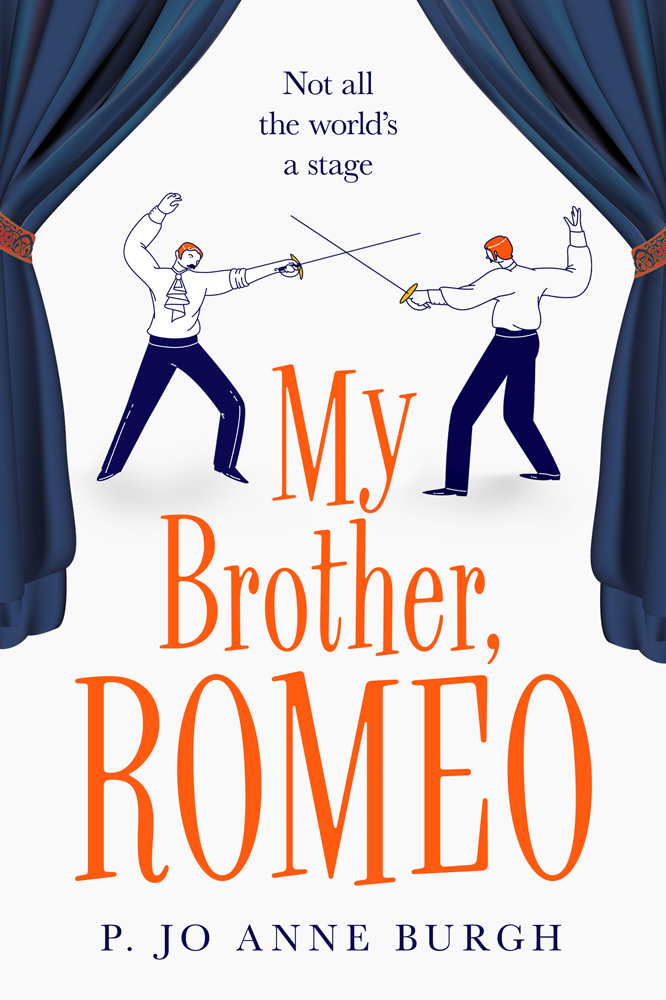
P.S. On Monday, March 2, 2026, I took part in Nutmeg Lit Fest’s Read Across America event. I read from my novella, My Brother, Romeo. If you’d like to watch, here’s the link (at 13:35).
 P. Jo Anne Burgh