The beginning of the year is a time for starting over. We sweep away old habits, old messes, old goals we didn’t meet, and in their place, we impose new ones. This year, we tell ourselves, this year will be different. This year, we’ll exercise, eat better, work harder, have more self-control. We’ll set goals and then achieve them, whether they’re little goals like losing ten pounds or big ones like selling that book we’ve slaved over for years for a six-figure advance. Of course, the internet is replete with cautionary advice about not trying to do too much, but what does the internet know about dreams?
I published Becoming Mrs. Claus last fall. Those who were reading this blog last winter know that at that point, I never thought it would happen. I was ready to trash that book and work on something, anything else.
As of this writing, I’ve read Amy Tan’s essay, “Angst and the Second Book,” at least twenty times. I’ve referred people to it. I’ve quoted it. I’ve underscored passages (and I’m not casual when it comes to writing in books).
Right now, this essay resonates in my soul.
Because on November 15, 2023–less than two months from today–I shall release my Second Book.
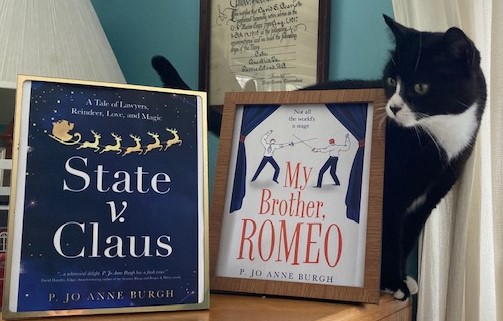
Technically, it’s my third book. My second book was a novella entitled, My Brother, Romeo (Tuxedo Cat Press, 2021), which was issued only as an ebook. That release was a deliberate choice. I’d published my debut novel, State v. Claus (Tuxedo Cat Press, 2020), a year earlier. I wanted to build up my backlist, and I knew the sequel to State v. Claus wouldn’t be ready for a 2021 release since, among other things, I hadn’t yet written it. So I published My Brother, Romeo to fill the gap.
My upcoming book, Becoming Mrs. Claus, is my second novel. Like State v. Claus, it will be published in paperback as well as ebook. In my heart, it’s my Second Book.
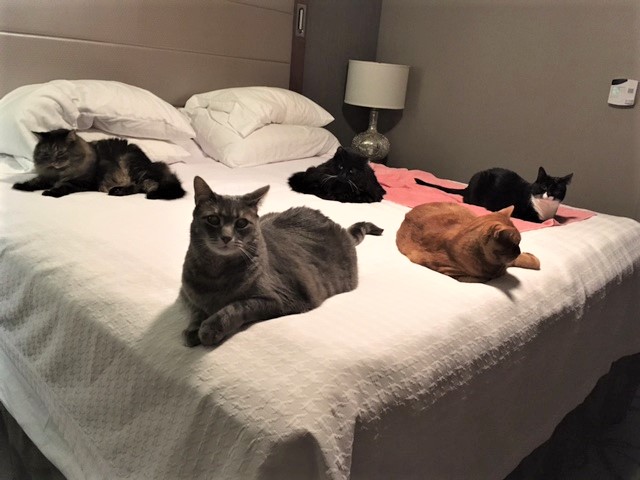
Relaxing on the hotel’s king-sized bed. October, 2017
As one who has lived with cats for nearly thirty years, I know all too well what it means to say that something is “like herding cats.” (For those unfamiliar with the expression, it means that you’re trying to gather and organize disparate items/events/personalities and it seems that each has a mind of its own and wishes to go off in a different direction.) Even when you love the cats dearly, as I do, herding them can sometimes drive you a little bit nuts.
An apt corollary would be “like indie publishing.”
July, 2013. Work was beyond summer-slow. In fact, there was nothing on my desk. Which wouldn’t have been so bad except that the client who still owed me a lot of money for an appeal had decided he didn’t have to pay anymore. So no work and no cash flow. It was grim, to say the least.
I sat at the table on my back porch, contemplating my next move. Should I wait for the legal research/writing work to pick up? Or should I start looking for a job working for someone else? Was my time up as an independent contractor?
The notion of going to work in someone else’s office, on someone else’s schedule, made me shudder. But what was the alternative?
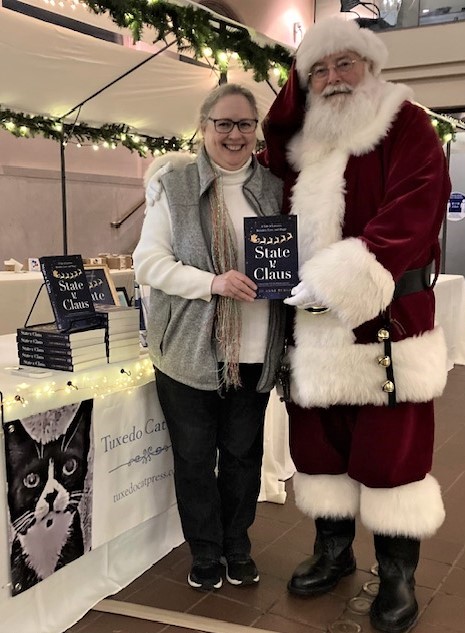
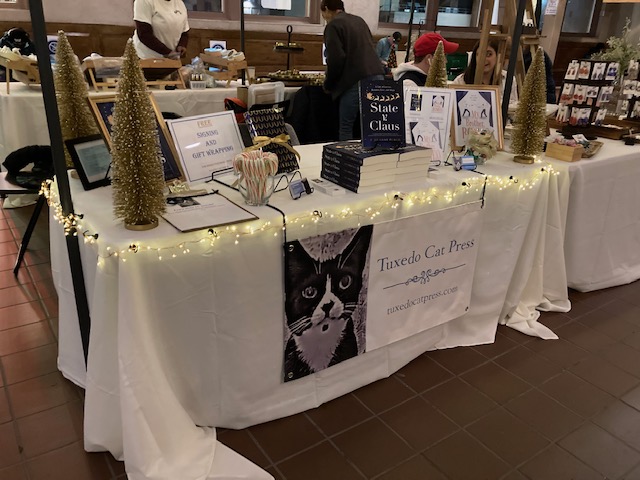
The 2022 holiday season was the first year that I made a serious effort to market my books directly to readers at live events. When State v. Claus was published in the fall of 2020, we were still in the throes of the pandemic, and so live events weren’t an option. The following year, when My Brother, Romeocame out, I wasn’t certain how to market it since it’s a novella and only available as an ebook, but I figured there was no point in a live event when people couldn’t buy a signed copy of the book.
I did two live events in 2021. One was a multi-author event held by my local bookstore at the town’s annual arts fair. All I had to do was show up, read, answer a few questions, and sign books after presentation. The bookstore did the rest, including the actual selling of the books and the marketing of the event.
The other event was at a local Christmas tree farm that wanted to create more of a draw for customers. I set up a small table in their greenhouse next to Mrs. Claus and hung out for a few hours, chatting with whoever paused for a candy cane.
Neither event resulted in many sales, but they proved a good way to get my feet wet. More importantly, they impressed on me the importance of handselling a book, i.e., talking to a potential customer about it. This impression was confirmed when I volunteered at the bookstore’s Independent Bookstore Day in April. When a young woman asked me for a recommendation, I inquired about what she liked. She wanted fiction, and she liked romance and fantasy. I really did try to come up with another title, but finally I said, “Maybe you’d be interested in my book.” I told her about it; with great excitement, she not only bought it, but recommended it to a friend who was there—who also bought a copy. Both women were delighted to have met the author and gotten signed books, and I was thrilled to have met such enthusiastic readers.
“Big deal,” you think. “You’re a writer. It’s what you’re supposed to do.”
Except to be honest, I’ve been struggling in recent months to come up with something that—in my humble opinion—is worth writing.
Maybe I’ve gotten pickier. Or maybe it’s that I’ve written some stories that I truly think are good, and yet they’ve have struggled to get off the starting block, and so I question my own judgment. One story has been a finalist in two different competitions and was highly praised by the organizers of one of those competitions–but as I sent it off today, I noticed that this was its seventeenth launch. It’s already awaiting judgment at three publications, but I submitted it anyway, albeit with more stoicism than optimism.
It’s that time of year when it seems as if we’re all looking forward to something—holidays, travel, breaks from work and/or school, gathering with people we love (especially after last year, when so many of us “gathered” over Zoom). Here in the U.S., Thanksgiving is tomorrow, and before the meal’s leftovers are consigned to the refrigerator, the shopping season will begin in earnest (if it hasn’t already).
In addition to all the traditional celebrations, here are a few extra things I’m anticipating in the next few weeks:
On Saturday evening, after dozens of rereads, corrections, edits, corrections, and rereads, I finally set the manuscript of My Brother, Romeo off to the formatter.
This morning, I realized that I need to make another change.
I wrote the original version of this story as fan fiction fifteen years ago, in 2006. Senses and sensibilities were different then. I’d already posted a few stories on a now-defunct fansite whose readers were almost exclusively women, many of whose philosophies and belief systems skewed toward the traditional. The story was set in the 1860s on a ranch in Nevada, where one might also expect traditional beliefs to predominate.
All of which explains why a particular bit of dialogue in the original version not only came naturally, but caused no fuss. In the scene, the narrator comes home after a frustrating attempt to cast the production of Romeo and Juliet. As he recounts all the inappropriate contenders for the role of Juliet, he mentions that a man in town wanted the role because in Shakespeare’s day, all the roles were played by men. One brother responds, “I always wondered about him,” to which the other says, “You and me both.”
On its face, this brief exchange is as innocuous as they come. Certainly, it is consistent with the characters of the original show, most of which was written and produced in the 1960s. Readers of the original version loved this bit of dialogue, seeing it as humorous and nothing else.
This morning, though, it occurred to me that these two lines carry an unintended flavor—one I don’t like. Granted, my story is set on a ranch in central California in 1962, and the lines are still consistent with the kind of comments people like my characters might have made without thinking. But the story is going to be read by modern audiences, and that needs to be borne in mind.
Since I’ve been guilty of overthinking things at least once or twice in my life, I debated contacting a friend for a quick sensitivity read to determine whether I was seeing ghosts. In the next minute, I realized that if I’m concerned enough to ask for the sensitivity read, there’s probably something there that needs to be addressed.
So I’ve worked out alternate dialogue that I plan to substitute when the manuscript comes back for finalizing. In my opinion, the new lines work better than the original. They’re equally humorous, plus they shift the focus away from the tone I find troubling. Win-win.
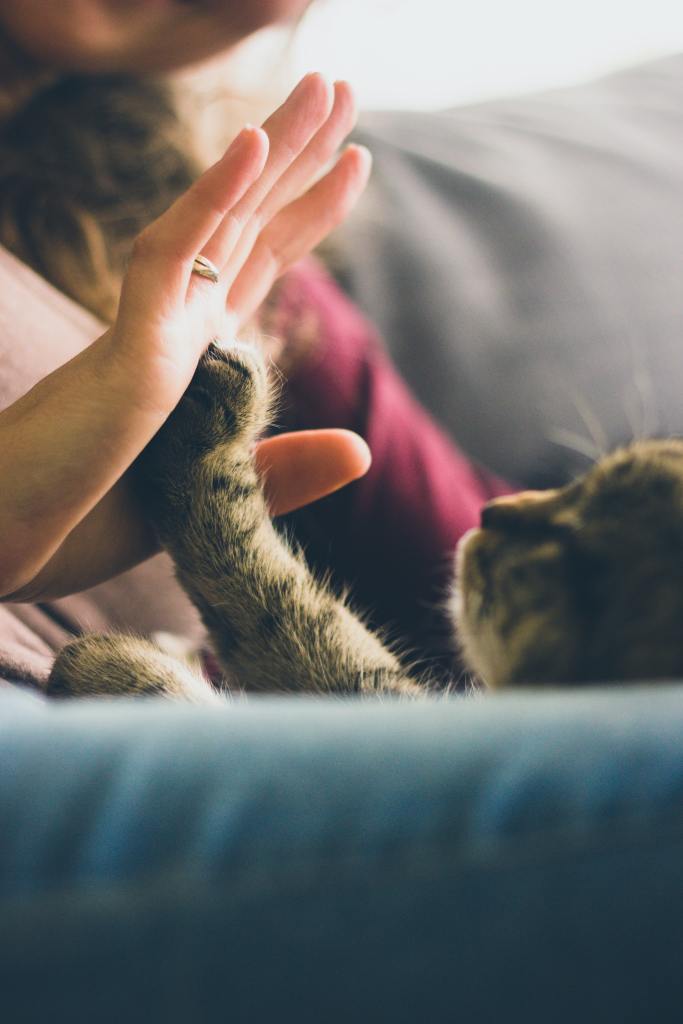
Photo credit: Jonas Vincent on Unsplash
Some people will think it ridiculous that I would even consider this change. For them, the fact that the lines are consistent with the characters and the setting is defense enough against any who might object. Many would likely not even notice anything unusual, much less find it offensive. Still others might rail against the idea of my “sanitizing” my work to make it “politically correct.” (Side note: “political correctness” is actually code for “think about how this makes someone else feel, and try to craft a phrase that isn’t hurtful to them.”)
For me, the decision to edit this dialogue comes down to a couple of basic points. One is that this story is meant to be lighthearted and fun; anything that is going to jolt a reader out of that mood needs to be reconsidered. Another is that fixing this tiny segment doesn’t detract in any way from the story. I’m not making the characters less authentic—I’m changing the landing point of the humor.
I’ve been writing long enough to know that no work will every please every reader. I’ve seen stories where the author is bending over so far to please a particular demographic or send a message to the reader that the rest of the story doesn’t ring true or is sanctimonious and annoying. A sentiment famously attributed to a number of Hollywood producers is that filmmakers are supposed to tell stories–if you want to send a message, use Western Union. (For those not old enough to understand this reference: for many years, Western Union was the company people used to send telegrams.)
In the end, the writer needs to be honest in telling the story, which includes being honest about how characters speak, think, and behave—but which doesn’t mean that there are no holds barred. The Adventures of Huckleberry Finn might have been accurate for its time in certain aspects, such as how the characters referred to Black people (although the book has been controversial ever since its publication in 1884), but it’s enormously unlikely that the book would be published today with the same language even if it were presented as historical fiction.
Assuming that an author has written a story to be read, a reasonable maxim to follow is that if a line is going to yank the reader out of the story’s world for any reason, from inaccuracy to offensiveness, chances are that’s a line that needs to be edited. At the very least, the author needs to take a long, hard look at the line and consider carefully whether—or why—it should remain in its original form and what possible effect it will have on the story if it is kept, modified, or even deleted.
Probably none of my stories are perfect in this regard. A few have been designed to make readers uncomfortable enough to begin a discussion or at least consider a different point of view. Most are meant simply to entertain. My characters may speak or act in ways that readers don’t care for, as with my mother’s objection whenever a character curses. The line between an honest telling and a troublesome one can be murky, and it’s one every author needs to find for themselves.
The world is not the same as when I wrote the original version of My Brother, Romeo fifteen years ago. Dialogues have become commonplace that were barely alluded to back then. Diversity and inclusion are more prevalent in both modern fiction and daily life. Simply put, many authors have learned that even though we have the best of intentions, our words may have caused someone to feel hurt, passed over, or unseen. We’re trying now to do better.
That’s why I chose to make this edit: I’m trying to do better.
In a small town in California, where we lay our scene,
From cattle roundups to Shakespeare’s famous balcony,
Where brotherly blood must overcome all obstacles
Lest the show not go on.
~~~~~~~~~~~~~~
Coming soon from Tuxedo Cat Press–the lighthearted story of two very different brothers who must find a way to work together on a community theater production of Romeo and Juliet.






 P. Jo Anne Burgh